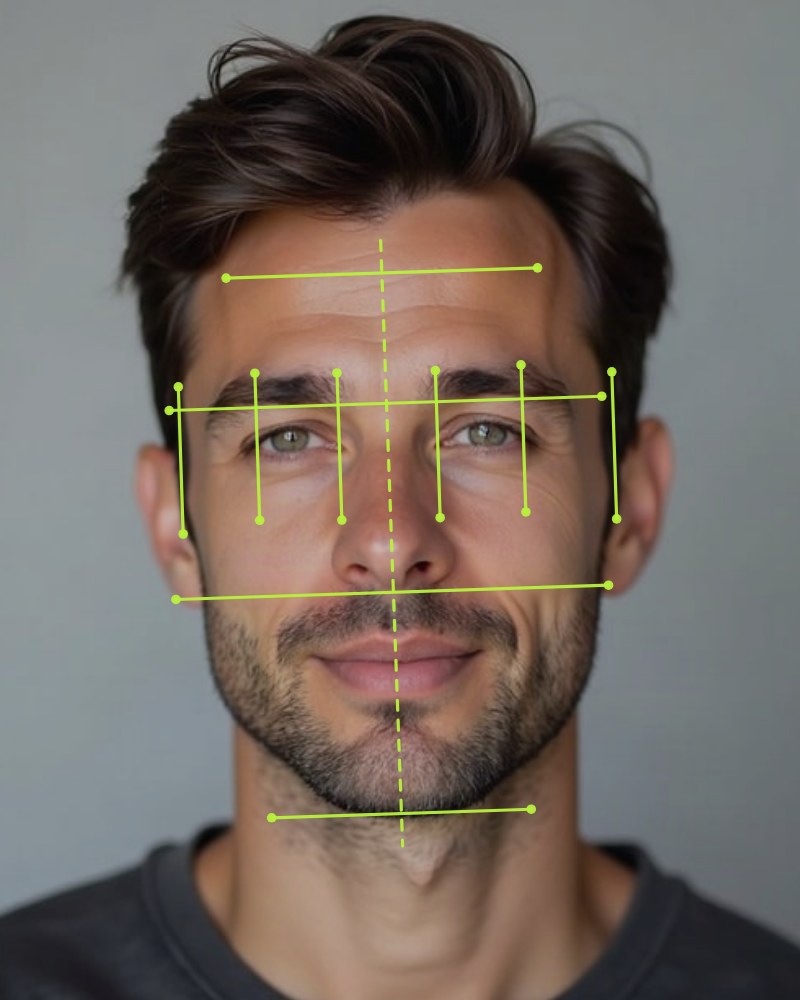
What upturned eyes are
Draw a line from the inner corner of the eye to the outer corner. On upturned eyes the outer end is clearly higher, so the eye seems to lift toward the temple. The lower lash line usually rises with it, which is where the cat-eye description comes from. The measurement behind it is a positive canthal tilt.
Upturned eyes get a lot of attention online, partly because winged eyeliner imitates them. That popularity is a fashion; it does not make other eye shapes lesser.
Upturned, or just a slight lift?
Here is the part most guides skip: a small upward slope is the usual case, not the special one. In this test’s calibration faces, the middle 60% read between +1.8° and +4.4°. So a positive tilt alone does not make an eye upturned. This page calls an eye clearly upturned above +4.4°, the top of that range, which about one face in five in the set reached.
The test’s own categories are simpler: above +1° is positive, between −1° and +1° neutral, below that negative. Your result shows both, the category and whether you pass the clearly upturned line.
How to tell if you have upturned eyes
Take the 3-shot selfie above with the phone level with your eyes, looking into the lens with a relaxed face. The test finds the inner and outer corner of each eye, measures each angle against the line through your pupils, and averages the two.
A camera held above your face pushes the reading up, which is one reason high-angle selfies make eyes look more lifted. Smiling raises the outer corners too. To see your resting shape, keep a neutral expression and an eye-level camera. If your two eyes differ by a degree or two, that is normal.
Mirror check: hold a pen level across your face so it touches both inner corners. If the outer corners sit clearly above the pen, your eyes are upturned.
Upturned, almond or hunter eyes?
Almond describes the opening: long, with tapered ends. Upturned describes the slope. Many almond eyes are upturned, but a round eye can be upturned too.
Hunter eyes, a looks-forum term, combine an upward slope with a narrow opening and a low brow. Upturned eyes only need the slope: an open, upturned eye under a high brow is not what forums mean. The hunter eyes page measures all three readings.
Common myths about upturned eyes
- “Upturned eyes are the best eye shape.” There is no best eye shape. Upturned is one normal variation.
- “Any positive tilt means upturned.” Most eyes have a slight positive tilt. Upturned means a clear lift.
- “You can train your eyes to turn up.” The corners are set by bone and ligament. Makeup and brows change how the shape reads; this page does not recommend surgery or any procedure.
Makeup and glasses ideas for upturned eyes
With upturned eyes, the choice is whether to follow the lift or balance it:
- Liner: a flick that follows the eye’s own upward line looks natural; to soften the lift, keep the wing short and close to horizontal.
- Lower lash line: a little shadow along the outer half of the lower lashes balances the lift, since upturned eyes often show more of the lower lid.
- Shadow: blend outward rather than upward for balance, upward for drama.
- Brows: an arch that peaks above the outer third of the eye repeats the lift; a straighter brow calms it.
- Glasses: round, oval and aviator frames balance an upward slope; cat-eye frames double it, which some people love.
What upturned eyes look like in everyday terms
Picture the feline, lifted gaze often seen on fashion magazine covers, outer corners rising toward the temples even without liner. That is the upturned shape.
Measure each eye on its own with the canthal tilt test, or read about the opposite slope on the downturned eyes page.
The eye shape detector puts the slope together with how open the eye is, so an upturned result there reads as upturned almond, upturned round or upturned narrow almond.