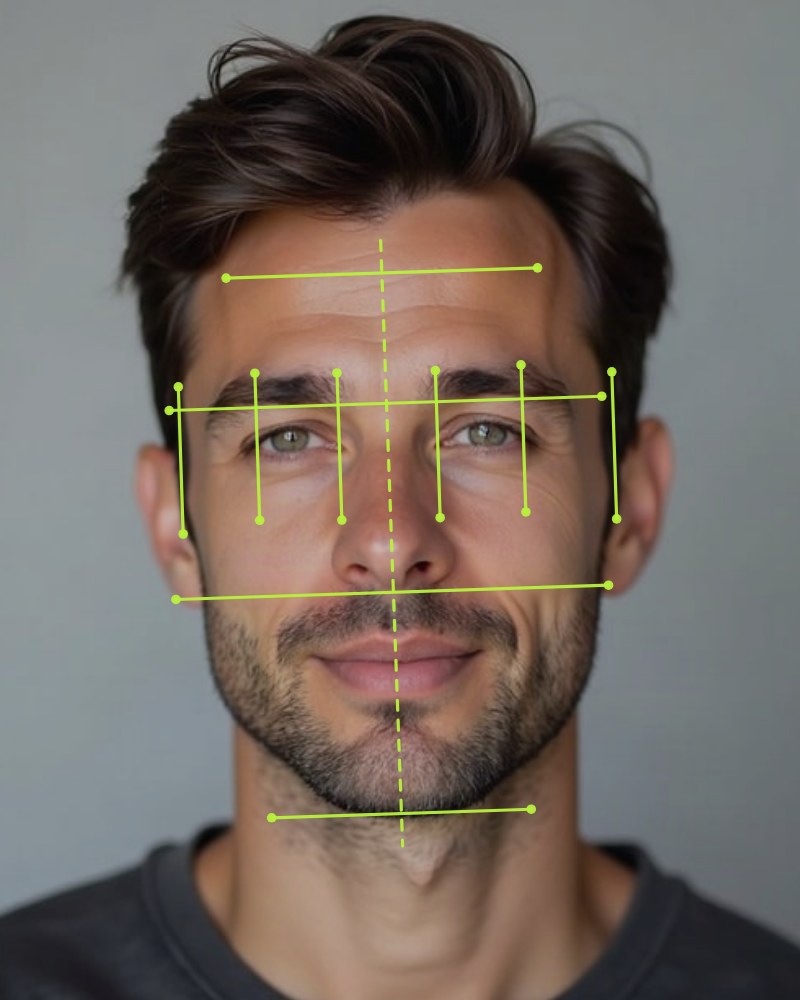
Where the term hunter eyes comes from
The phrase comes from looksmaxxing forums and short videos, where faces get broken into traits and compared. “Hunter eyes” is the forum name for an eye area that looks focused and a little shaded by the brow. The opposite in the same vocabulary is “prey eyes”: rounder, more open eyes with more visible eyelid. US searches for the term roughly tripled over the past year, mostly from people asking whether they have them.
It is worth being plain about what this is. Hunter eyes is a phrase from internet culture, not a medical or beauty standard. Eye doctors do not use it, and neither label describes a better or worse eye. Open, round eyes and narrow, hooded ones are both normal, and both turn up on faces people admire.
The traits people mean by hunter eyes
Descriptions vary from video to video, but the same few traits keep coming up:
- A positive canthal tilt: the outer corner of the eye sits higher than the inner corner.
- A narrow, almond opening: the eye is long and not very tall.
- A low brow: the eyebrow sits close above the eye, so little upper lid shows.
- Often added: deep-set eyes, almost no visible upper eyelid when looking straight ahead, and a straight rather than arched brow.
How to check if you have hunter eyes
The test above reads three numbers from your photo and shows each one next to this page’s line. Tilt counts as lifted above +1°, the test’s own line between neutral and positive. The eye counts as narrow when its height is under 0.278 of its width, and the brow counts as low when the gap from brow to eye is under 0.257 of the eye’s width. Those two lines are the 20th percentile of the test’s calibration faces: about one face in five in that set falls under each.
The result says how many of the three line up. It does not say yes or no, because the term has no fixed definition, and two of its traits, deep-set eyes and a hidden eyelid, need a side view or a depth reading that a front photo cannot give.
For a fair reading, look straight into the lens with a relaxed face and the camera at eye level. Raising your brows, squinting or smiling changes all three numbers. This page only measures uploaded photos that face the camera straight on, because a turned head pulls the two eyes’ readings apart.
Common misconceptions about hunter eyes
- “One selfie tells you.” A photo from below, a slight squint or a raised brow can flip every reading. Average three shots, as the selfie mode here does.
- “Hunter eyes are a male trait.” The same eye shape appears in every gender; the forum label just gets used more about men.
- “Exercises can give you hunter eyes.” Videos promising this mostly change expression, such as squinting or lowering the brow, and the effect goes when you relax. This page does not recommend surgery or any procedure.
- “Hunter eyes decide how good you look.” A few degrees of tilt and a millimetre of brow gap are small details in a whole face, and the forum ranking itself is a trend.
Brows, makeup and glasses for this eye shape
If your readings line up with the term and you like the look, styling can frame it. If they do not, the same ideas work on any eye area:
- Brows: keep them full and fairly straight. Brushing them up a little opens the eye area; keeping them flat holds the low line.
- Makeup: a smudged liner along the upper lash line with a short flick that follows the eye’s own angle shows off the shape; light shadow on the lid keeps it from looking heavy.
- Glasses: frames whose top line sits near the brow, like browline or rectangular frames, echo a low brow; round frames soften it.
- Photos: look just past the lens with a relaxed lower lid. The “squinch” photographers ask for is a gentle tightening of the lower lid, not a squint.
What the look is in everyday terms
Picture a film character with a calm, level gaze under a straight brow, the eyes a little narrow and the outer corners turning up. That expression is what the forum term is trying to describe, and much of it is expression rather than anatomy.
Measure the angle on its own with the canthal tilt test, compare it with upturned eyes, or read where the forum’s scoring comes from on the PSL scale page.
For the everyday name of your eye outline rather than the forum one, the eye shape detector uses the same narrow-eye line and says almond, round or narrow almond.